
I originally registered these domains in 2005 because the online real-estate tool I wanted to use didn’t exist yet. (It showed up the next February. It was called Zillow.)
Twenty-one years later, the two names are the oldest real-estate domains in my portfolio, and age is the one thing you can’t buy for a domain. So this week they finally became a site: loftscondos.com, a plain-English guide to buying and living in lofts and condos, starting with my own city, Minneapolis.
The first thing I learned is that “loft” tells you nothing about ownership. Plenty of Minneapolis buildings with “Lofts” in the name are apartments. 724 Lofts, Gurley Lofts and the A-Mill Artist Lofts are all rentals. There are even two Bassett Creek Lofts a few blocks apart: one is a 1917 condo, the other a 2019 apartment building. A buyer’s guide that mixed those up would be worse than useless.
It turns out there’s a clean test, and it’s public. Hennepin County publishes its parcel map as an open data service. A condo building shows up as dozens or hundreds of parcels, one per unit, all sharing a plat name like “CIC NO 0313 ITASCA LOFTS.” A rental building is a single parcel typed APARTMENT. So every one of the fifteen buildings on the site carries its county CIC number, and anything I couldn’t verify that way stayed off. Listing sites don’t help here: Apartments.com lists units in Harvester, Tower and the Carlyle, but those are individual owners renting out their condos, not rental buildings.
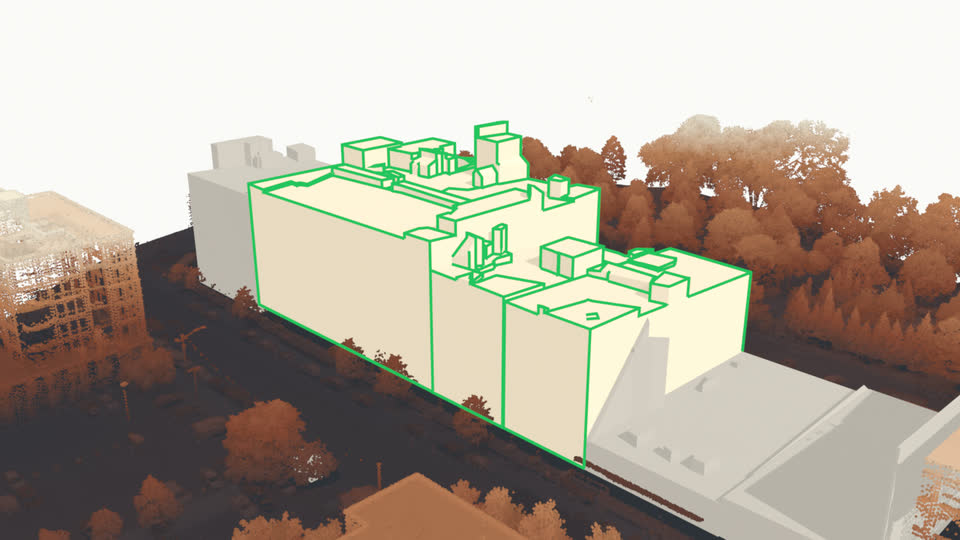
The second thing I learned is that I wasn’t allowed to show the buildings the way I wanted. Every building page wanted a slow orbit, the kind of Google Earth fly-around you see in real-estate videos. Google’s terms rule that out for a commercial site, and so do Apple’s, Mapbox’s and Cesium’s. I own a small drone, but flying it for a commercial site needs a Part 107 certificate, a Minnesota commercial license and insurance, none of which I have yet. So I built the orbits from public data instead: the USGS flew the river corridor with lidar in 2022, the city publishes building footprints, and an open-source tool called roofer turns the two into simple 3D models. Each building page has one. They’re clearly models, not photos, and they’re entirely mine to use.
The guides are the other half of the site, and they were the most fact-checking I’ve done on this project. Condo lending changed a lot in 2026: Fannie Mae and Freddie Mac dropped their owner-occupancy test in March, capped the per-unit insurance deductible in July, and tightened reserve-study rules in August. FHA didn’t follow on owner-occupancy. A guide written from what I “knew” last year would have been wrong in four places.
What shipped: four guides (loft vs. condo, buying and financing, HOA living, loft quirks), a Minneapolis section with fifteen verified condo buildings across the North Loop, Mill District, Downtown and Northeast, and a question form that only promises an email reply. No phone field, no “we’ll connect you with an agent.” Real-estate lead generation has real rules (RESPA, fair housing, consent for calls and texts), and I’d rather have a lawyer read it before the site makes any promise it can’t keep. lofts-condos.com now redirects to the main site.
The 1w1i takeaway: sometimes you need to get creative with the methods at your disposal. I couldn’t use Google’s 3D, couldn’t fly my drone and couldn’t trust the listing sites, so a county parcel map and a government lidar survey did the work instead.
— c